
QBRs & business reviews
A business review has to prove value delivered and re-sell the renewal inside the same thirty minutes. The hard part is that the value went invisible weeks after it landed, and you are the only person still holding the before picture.
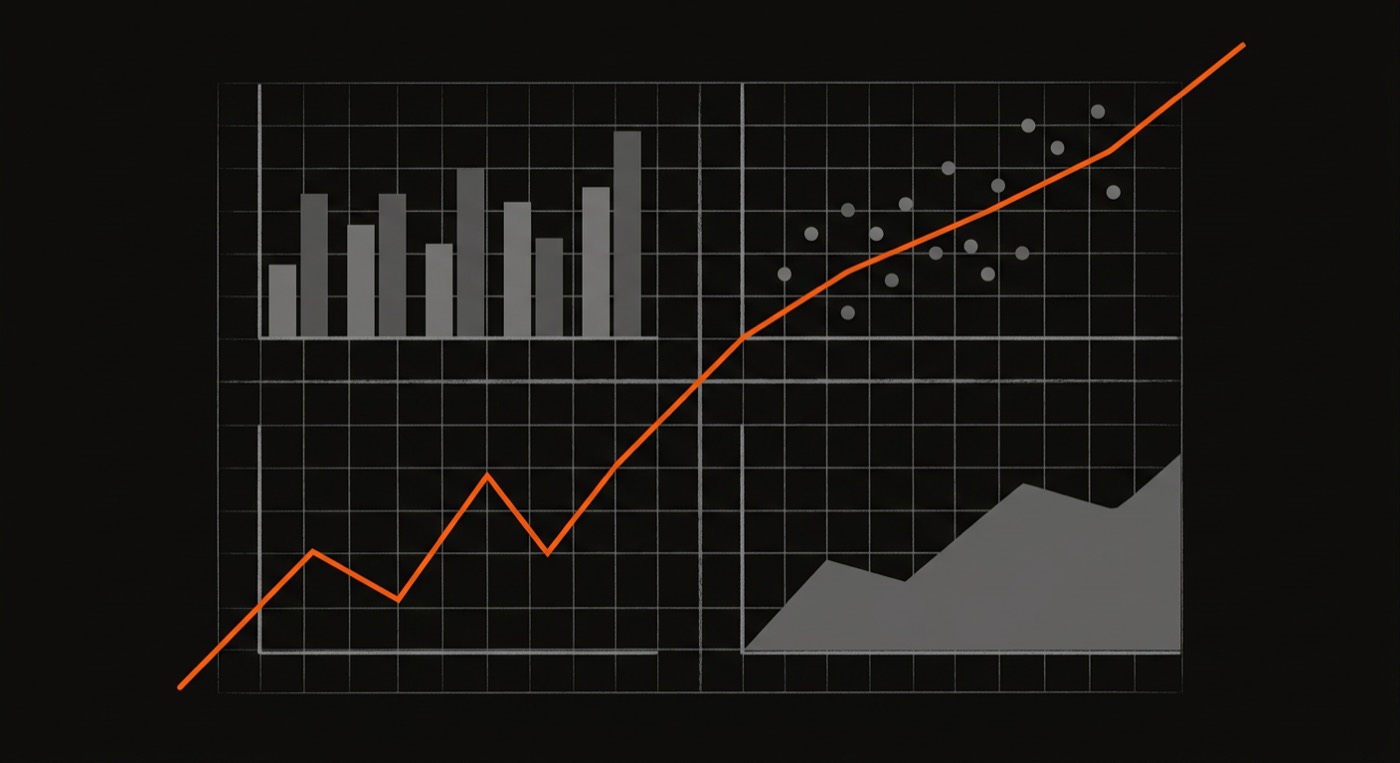
The win from month two is invisible by month eleven
You fixed something real. It stopped being a problem, so it stopped being discussed, so it stopped counting. Then the renewal conversation opens with what have you done for us lately, and you are reconstructing the original baseline from memory and old email threads the week before the meeting.
Value decays in memory far faster than in reality
Nobody logs the before state at the time, because at the time everyone is busy fixing it. The improvement becomes the new normal within a quarter and the new normal never feels like an achievement. Your product keeps working and gets progressively less credit for it.
What this is quietly costing you
Renewals get decided by whoever remembers most vividly, and that is rarely you. The churn that surprises you is usually an account where the value was real and simply never got recorded in a form the buying committee could see.
What's different once DeckShift is in the loop
The delta is on the record, in their units
Last quarter's baseline against today's numbers, measured the same way, with the change visible rather than asserted. The review makes the argument before you say anything.
The renewal re-sells itself without a sales pitch
A business review that demonstrates value does not need to pivot awkwardly into a commercial conversation. The case for continuing is the same evidence you just presented.
Expansion lands because the ground is already proven
Asking for more is a different conversation when the room has just agreed, on their own numbers, that the last thing worked.
What it's worth
Retained and expanded revenue is the cheapest revenue you have: no acquisition cost, no competitive cycle. A business review that reliably lands is worth more per hour of preparation than almost anything else your team does.
You will find no customer logos or outcome metrics on this page. DeckShift is pre-launch, and we hold our marketing to the standard the product enforces: claims carry sources or they don't ship. The numbers above come from linked primary research. Ours will appear here when customers exist to measure.
Seed deck in, personalized deck out
The seed deck on the left, the generated output on the right, confidence badges visible.
Worked example for qbrs & business reviews: seed deck + generated output
The answers your reviewers will want
A deck tool sees competitive material, so somebody on your side is going to ask where it all goes. Short versions below; the long versions are one click away.
Training
Your decks never train third-party foundation models. Our AI providers are contractually barred from training on your content. Our own engine improves on de-identified, aggregated content only, and you can opt out in account settings.
Retention
Raw uploads live only as long as delivering your output requires, then get deleted or reduced to de-identified form. Your generated library persists with your account, under your control.
Deletion
Your identity and your content are held separately. Delete your account at any time, or write to privacy@deckshift.app and we delete on request.
The goal is renewals that feel like formalities, because by the time the meeting happens the value has been visible all year rather than reconstructed in a panic the week before.
Team
$360 a user a year, ten-seat minimum, with a shared brand library, pooled shifts, and the deck performance dashboard.
How the argument gets built
The Bridge is built for exactly this: last quarter's baseline against today's numbers, same units, and the gap between them quantified rather than asserted. The Fit closes, taking the risk out of recommitting.
The Bridge
Measure the distance. Then build the way across.
The Fit
The deal isn't lost. It's stuck. Different problem.
Solo reps
You are the whole go-to-market team, and the deck is the thing that keeps getting cut.
See the workflowSales teams
One story, eleven versions of it, and no way to fix that without freezing the deck.
See the workflowSales leaders
You can read every number in the funnel except the one that explains the others.
See the workflow